Tuesday, October 27, 2015

Movie Review: "Dracula" (1931) by David Pretty


With its beautiful Gothic sets, florid performances and creepy atmosphere, Universal's Dracula is an elegiac and haunting classic. Having said that, you can't help but wonder how much better it could have been if a different director had been at the helm. Although Tod Browning did a serviceable job, quite often the story feels disjointed, the pace and is stiff and stagey and the movie lacks a distinct visual style.


Like The Mummy which followed a year later, the picture opens up to the haunting strains of "Swan Lake". As one of the earliest "talkies", Dracula didn't have wall-to-wall music like today's films. Even though a soundtrack can really heighten the impact of on-screen scares, sometimes the action can be made spookier by its absence. Prior to Dracula, Tod Browning was a successful silent film director, and many posit that he was uncomfortable with soundtracks and dialogue scenes. Whether it was deliberate or not, large swaths of the film tick by in complete silence, producing a genuinely disquieting effect. 

We follow the course of a carriage as it winds it way through the Carpathian Mountains in Transylvania. Along the way we're treated to some gorgeous black and white photography by legendary German cinematographer Karl Freund, who'd already worked on a lot of classic movies including the sci-fi masterpiece Metropolis. The highly-detailed sets and matte paintings look incredible and within minutes a creepy atmosphere is firmly established.

We soon meet Mr. Renfield, played by the inimitable Dwight Frye. When it's revealed that he's en route to Castle Dracula to conduct some business the locals start freaking out, claiming that the place is infested with vampires. As if to leave no doubt of this, we immediately cut to a creepy underground crypt. Freund comes through again with a wonderful dolly shot that creeps up on Dracula's coffin. The lid slowly shifts to one side and a gnarled and twisted hand with long fingernails slowly emerges from the darkness.


This whole sequence is a veritable symphony of horror and within a few short minutes we're completely invested in what's going on. Soon Dracula's three spectral, silent and slightly-hunched vampire brides emerge from their respective coffins and start drifting through this dusty labyrinth. This is followed by a series of inexplicable and unsettling images involving a giant bug crawling out of a crypt and some pissed-off possums milling around. Through it all this eerie mise-en-scène is well-sustained and perfectly convincing.

And then we're hit with a close-up of Lugosi's corpse-pale face and hypnotic, penetrating eyes. Whatever you want to say about Lugosi's acting chops, he's certainly fascinating to look at. Pretty soon he's masquerading as his own coach-driver, guiding Renfield to his estate after all of the villagers bail on him. During this sequence, Lugosi just oozes malevolent command. Eventually our nominal hero reaches the castle and ventures inside where we get Dracula's grand reveal. 

When Lugosi descends from the staircase in that decrepit and authentic-looking castle set, it's an iconic and legendary cinematic moment. By all accounts, Lugosi was still trying to master the English language so a lot of his deliveries were done phonetically, leading to a truly off-kilter and memorable performance. This line alone still gives me chills:


Another nice touch: when Renfield tries to follow his host upstairs he finds the path inexplicably blocked by a thick wall of spider webs. Sorry, but if I'd just seen Dracula drift right through that shit I would have turned around and run screaming back towards the village at top speed. Not that it would have mattered much since Drac would have just changed into a wolf, run me down and ripped my throat out.

Indeed, in the very next scene, Dracula transforms from eccentric, dignified aristocrat into a rabid animal right in front of our eyes. The predatory look he gives to Renfield after he mistakenly cuts his finger open is still super-creepy. When you add in the hyena-like approach of his three vampire brides the effect is particularly disconcerting. Between Lugosi's riveting presence and his thick Hungarian accent, he was, and still is, the personification of pure evil and the best Dracula to date.

Even though most of the production design is impeccable there are a few "special effects" that show their age including a goofy, rubbery bat and a "ship" that looks suspiciously like a kids toy being thrown around in a bathtub. Tod Browning quickly atones for this in the following scene. When the now completely bat-shit insane Renfield rouses Dracula from his slumber the Count wakes up in a pretty foul mood. The next thing we see are the authorities inspecting the derelict ship with Dwight Frye's maniacal laughter as the only soundtrack. I swear, the first time you hear this it'll be burned into your memory forever. 


After the ship makes landfall, Dracula is soon prowling the streets of London wearing a cape, top hat, white gloves and carrying a totally pimp Dolemite cane. He chows down on a Cockney flower girl, which brings to mind shades of Jack the Ripper which, at that time, had only happened about forty years prior. Between the authentic sets, the pea-soup fog and Lugosi's practiced body language, the scene is downright eerie. Fun fact: Lugosi's hypnosis is a forerunner of the vampire's "glamour" ability in modern fare such as True Blood.    

Sometimes Tod Browning's directorial choices work and sometimes they don't. While the newspaper clippings about the fate of the Vesta pays homage to the original novel, it's one of many lapses which hobble the film's visual appeal. When the action moves to London things get particularly disjointed. From the theater, to Lucy's bedroom, to a surgical ward to Seward Sanitarium these scenes get thrown at us in rapid succession with precious little connective tissue to unite them.

The camera set-ups for the dialogue scenes are particularly static and uninspired. Indeed, whenever the characters are just shoveling expository dialogue at us it's usually done in a pretty boring shot / reverse shot manner. Whenever you see a camera set up that's the least bit ambitious, such as a crane used to establish Dr. Seward’s sanatorium, we can likely credit Karl Freund for these rare and highly-welcome visual flourishes.   

But for every stylistic miss-step something really cool and creepy happens on-screen. When Dracula invades Lucy's bedroom and creeps closer and closer to her in her sleep the effect is still chill-inducing. As comedy relief goes, Charles K. Gerrard is actually pretty funny as Renfield's über-cockney handler Martin. And with his hard-to-place accent and measured delivery, I still consider Edward Van Sloan's Van Helsing to be one of the best.


Indeed, whenever Van Sloan and Lugosi are on-screen together the tension is palpable. Employing the good old "vampires-don't-cast-reflections" shtick, Van Helsing tricks Dracula into looking at a mirror. I love Lugosi's reaction to this: he goes from rage to composure to contrition to regret in the space of thirty seconds. I don't know what's more satisfying: Lugosi's recovery or Van Sloan's juicy look of self-satisfaction. Regardless, this is one of the most iconic confrontations in cinema history.

Supposedly the original plan for Dracula was a lot more ambitious, but the stock market crash forced the film-makers to scale back on the production. As such, Garrett Fort delivered a script that was little more then an adaptation of the Dracula stage play. Consequently, a lot of things happen off-screen. For example, when Dracula turns into a wolf all we get is Jonathan Harker looking stage right and exclaiming "What's that? Running across the lawn? It looks like a huge dog!" This happens again when Martin reads a newspaper account of an attack on some kids and when Mina relays a story about a harrowing encounter with her now-undead pal Lucy.   

There's only one instance when this decidedly anti-cinematic technique actually works, and sole credit for this belongs to Dwight Frye. As Renfield recounts a visit from Dracula it results in one of the creepiest moments in horror film history:


The next time Dracula and Van Helsing face off the Count is ready. After hitting his rival with an hypnotic whammy it looks as if the Professor will succumb to the vampire's will but Van Sloan does a great job showing us how his character finds his way out of this mental fog. I also love everything that Lugosi does in this scene, between his twisted, skeletal hand, his stern countenance and his dead-pan utterance of "Come...hur." It's great to watch these two powerful actors indulging in this intense battle of wits.

By contrast the the two romantic leads are rather dull. David Manners is strident and protective as Jonathan Harker, but almost to a fault. With his firmly-set jaw and highly-starched upper lip, Manners spends most of his time strutting around, acting skeptical and whining about Mina. Don't get me wrong, someone had to play the part of the lunk-head fiance and Manners does a good job in this thankless role.

At first Helen Chandler is equally annoying as Mina Seward, acting as if she's constantly under threat of a fainting spell. But things get a lot more interesting when she starts to vamp out. The wanton, lustful persona she takes on after stepping out with the villain really highlights the nascent sexual overtones of the film. If nothing else, Dracula is the perfect allegory for sexual promiscuity. The Count would never think to limit himself to just one biting partner; hell, he had three willing playmates in the basement of his castle! And, as it turns out, there's a large part of Mina that would prefer some variety instead of a lifetime of monagamy with the boring and white-bread Jonathan.  

 
As the film races to it's breakneck conclusion you begin to realize just how intense this must have been for audences back in 1931. On an epic spiral stone staircase, Dracula stalks and murders Renfield with the enthralled Mina in tow. The rising sun forces him to take a dirt nap and not long after Van Helsing and Jonathan arrive to try and track down the Count's coffin.

Movie-goers back then must have been on the edge of their seat as the ever-resourceful Van Helsing broke up the lid of the coffin, fashioned an impromptu wooden stake and prepared to impale the sleeping vampire. Even though Dracula's death happens off screen, Mina's distinctly sexual reaction to his demise must have caused viewer's heads to explode back then. It's moments like that which remind us that certain themes, especially those explored in the horror genre, are pretty universal and, by the same definition, eternal.      

Dracula might not be a perfect film but it's influence is still felt to this very day. Granted the wonderful performances and the atmospheric first reel does segue into a stagy and relatively-drab second half, it's still the prototypical vampire flick for the ages.


      Tilt: up.


Monday, October 19, 2015

Movie Review: "Crimson Peak" by David Pretty


IN A NUTSHELL

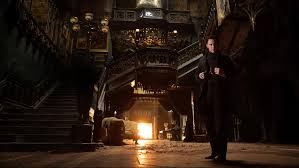
Aspiring writer Edith Cushing (Mia Wasikowska) seems perfectly content with bookish spinsterhood, that is until a tall, dark, Loki-esque stranger named Sir Thomas Sharpe (Tom Hiddleston) enters her life. After some mysterious and tragic circumstances, she agrees to marry Sir Thomas and is whisked away to the cold and wind-swept environs of Allerdale Hall in England. The creepy and decrepit mansion is made even more uninviting thanks to the presence of Thomas's bloodless sister Lucille (Jessica Chastain) who treats Edith like an interloper. In time, Edith becomes suspicious of their collective motives and when a childhood warning comes back to haunt her, escape from Crimson Peak becomes a priority. 


IN THE WHEELHOUSE

If you're looking for a hoary old ghost yarn in the vein of classic Gothic horror tales like Wuthering Heights, The Fall of the House of Usher, Dracula, or The Castle of Otranto then you'll enjoy this spooky and atmospheric picture. 

PROS
  • It's Gorgeous.  Art director Brandt Gordon, production designer Thomas E. Sanders, costume designer Kate Hawley and set decorators Jeffrey A. Melvin and Shane Vieau have produced a truly gorgeous final product to look at. Add in some sweeping and sumptuous camerawork by cinematographer Dan Laustsen and you're got an incredible sumptuous visual treat that's a joy to behold.
  • It's Well-Acted.  With her distinctive looks and solid acting chops, Mia Wasikowska makes for a sympathetic and relatable heroine. Tom Hiddleston is as sure-footed and charismatic as ever, keeping his cards close to his chest and emerging as a slightly tragic figure. Charlie Hunnam is noble and tenacious as Dr. Alan McMichael, Edith's jilted love interest who also serves as the Dick Hallorann from The Shining role. It's also great to see Supernatural's Jim Beaver on hand as Edith's dad Carter, even though I really wanted him to call Tom Hiddleston's character an "idjit" at least once. Finally, Jessica Chastain deserves major plaudits for bringing duplicity, vindictiveness and bat-shit nuttery all together in one sultry package. Even though some people might dismiss some of the performances as over-ripe, I think everyone is well in-bounds given the melodramatic subject matter.    
  • It's Got All The Ingredients.  Between ghosts, virginal maidens, poison, secret agendas, stalwart heroes, creaky mansions, murder, mystery, spiritual foreboding and "Bluebeard"-style warnings, Crimson Peak certainly delivers as a Gothic romance. Bonus points: the central character's last name is Cushing, presumably in honor of the late, great horror icon Peter Cushing.
  • It's A Good Yarn. The script by Guillermo del Toro and Matthew Robbins unfolds at a leisurely pace, like a good novel should. By the end of it, you know the character quite well and understand their motivations, even if those motivations just so happen to be "Coo-Coo for Cocoa Puffs". Their patient investment in both the characters and the story helps bring everything to a logical, meaningful and satisfying conclusion.
  • It Sounds Fantastic. Working in tandem with sound designer Randy Thom, del Toro ensures that you hear every creaking floorboard, settling foundation, clanking pipe, phantasmal whisper and candle flame flutter as the camera whips by. The guttural, tortured exhalations of the specters are particularly effective. Throw in an alternately florid, cacophonous and moody musical score that brings Alien, of all things, to mind and you've got one creepy and engaging auditory experience.
  • It's Well-Directed.  For a relatively-talky Gothic horror piece, del Toro and his editor Bernat Vilaplana keep things moving at a brisk pace. Notwithstanding a vibrantly-shot and beautifully-choreographed dance sequence as well as Carter's brutal demise, the film really gets cooking when the action shifts to Allerdale Hall. From there on it we get a well-orchestrated escalation of dread, some truly harrowing haunt sequences and a brutal and unrestrained climax that features more than a few squirm-inducing moments.  
  • It's Respectable. Quick, disposable found footage flicks, remakes and slasher knock-offs only serve to cheapen the genre so it's nice to see a high-mast horror movie for a change. If nothing else, Crimson Peak honors the roots of the genre with excellent production values and keen aesthetic choices.

CONS
  • It Doesn't Break Any New Ground.  Sure, Crimson Peak is a well-made Gothic horror romance, but what new tricks does it have up its puffy sleeve? Unfortunately, not many. Sadly, the script is kinda predictable, to the point where none of the major "revelations" really took me by surprise.
  • It Isn't Super-Scary.  It's a darned good thing that I went into this knowing full well that it was a Gothic romance and not the unrelenting fright fest that the trailer would have us believe. Sorry, but compared to The Woman in Black, this one's actually quite tame. 
  • Digital Spooks? *YAWN*.  Before I go any further I want to state for the record that Crimson Peak is light years above and beyond CGI bore-fests like 1999's The Haunting. Del Toro actually wrings a lot of mileage out of his inventive ghost designs and their mournful manifestations, but, when everything's said and done, it still comes off as transparently- fraudulent digital trickery. 
 
THE BOTTOM LINE

As a former English Major I pretty much knew what to expect with Crimson Peak. Anyone going into this expecting a blood-soaked, action-packed, balls-to-the-wall horror thriller is going to be sorely disappointed. But if you're looking for a well-acted, gorgeous-looking, expertly-crafted little chiller that honors the roots of the Gothic horror genre, you'll be well-entertained.


Tilt: up.


Tuesday, October 13, 2015

Movie Review: "Sinister" by David Pretty


IN A NUTSHELL

Ethan Hawke is Elliot Oswalt, a true crime writer who's career has hit the skids. Looking for the grist to inspire a new bestseller, he moves his family into a house that was the scene of a grisly quadruple murder. Not long after he discovers a cache of Super-8 home movies in the attic which turns out to be a series of snuff films made by the killer. After a series of seemingly-disparate homicides start to knit together, Elliot begins to realize that there's more to these horrendous crimes then just the sick whims of a deranged serial killer. 


IN THE WHEELHOUSE

Slasher fans, hardcore gore-hounds and torture porn freaks will probably find Sinister a bit too pedestrian. But for discriminating horror fans who dig good characterization, a decent story, fine acting, suspense, tons of atmos-fear and some bonafide shocks will all be predisposed to this one.

PROS
  • The movie snags your attention right out of the gate with some grainy Super-8 footage of four people standing next to a tree with hoods and nooses around their necks. A shadowy figure emerges from the underbrush and starts to saw through one of the bigger branches, creating a counterweight that hauls them into the air. The camera lingers dead-eyed on this as the victims kick and thrash until they're dead. It's a truly horrific grabber that ensures that you'll either press "STAHP" on your Blue-Ray remote or keep watching right until the very end.
  • Even though Elliot does does some truly heinous things, Ethan Hawke manages to humanize the guy. As a struggling writer, I know what it's like to have circumstances threaten to take away your sole raison d'être. But Elliot has more pressing concerns, like a frazzled wife, a sensitive daughter and a son with behavioral issues. By ignoring all of this, the character starts to drift into "irredeemable asshole territory", but over the course of one-hundred and ten minutes, Hawke delivers such a nuanced and tortured performance that he actually gets you into his corner. 
  • Juliet Rylance does a solid job as Elliot's wife Tracy, even though her performance is a tad schizophrenic. As written on the page, Tracy is super-skeptical about Elliot's plan but some of her early line readings are so over-the-top cheerful that she sounds like she's been eating Zoloft like bowls of Captain Crunch. Nevertheless, it's still a good showing, particular when Elliot's true motivations are revealed and the shit hits the fan.
  • Both of the kids are also great. Clare Foley plays Ashley, a sensitive, artsy, seven-year-old who mourns the life she was dragged away from and paints on her bedroom wall to assuage her sadness. Even though her character goes though a spectrum of emotional trauma, Foley gives a very measured, disciplined and mature performance. Not once does she come across as whiny or irritating. As her older brother Trevor, Michael Hall D'Addario doesn't get as much screen time but he's just as convincing, serving up one particularly freaky and memorable moment that will probably stay with you long after the film is over. In every scene they share together, Foley and D'Addario feel a real brother and sister duo, bickering and picking at one another mercilessly. 
  • In addition to Ethan Hawke's seamless performance, screenwriters C. Robert Cargill and Scott Derrickson go out of their way to make what could have been a preposterous plot feel plausible. Since were told that Elliot's last few books completely tanked, we know that he's really desperate for a hit. This certainly doesn't excuse him for secretly moving his family into a macabre crime scene but it does give him a solid, if somewhat sketchy, motivation. He also redeems himself in our eyes somewhat when he seeks to determine what happened to Stephanie, the little girl who went missing after her family was murdered. Not only does this deepen the mystery of the film, it also gives Elliot a slightly more noble excuse to do what he does.
  • Just when the film threatens to unspool as yet another color-by-numbers true crime thriller, Derrickson and Cargill start throwing curve-balls at us. The first one, which is the discovery of the Super-8 films, immediately cranks the Creep-O-Meter up to eleven and then breaks the knob off. Between the use of scratchy and grainy "film stock", hand-held P.O.V.'s, vintage color timing and effective lighting, every one of these segments comes off as uncomfortably authentic. "Lawn Work '86" alone scared the ever-lovin' fertilizer outta me. 
  • When Elliot digitally imports the Super-8 films he starts to get glimpses of the killer. Throw in a few creepy drawings and a weird pagan symbol that pops up from time to time and you have the makings of a new modern horror villain that never lapses into parody.      
  • All of this ritualized stuff inspires Elliot to Skype with a local professor named Jonas, played by the consistently-awesome Vincent D'Onofrio. In so many horror movies, the "lore-delivery expert" has a tendency to over-dramatize their exposition but not D'Onofrio. Even though he's only seen on a computer monitor, D'Onofrio makes a great impression with his scholarly appearance, matter-of-fact deliveries and unique mannerisms. It's a brief but memorable appearance. Related to this, James Ransone is also solid as "Deputy So & So", a slavish fan of Elliot who digs up some pertinent facts about the case. Ransone's performance is so intense and awkward that he acts as a walking, talking red herring throughout the entire film. 
  • Director Scott Derrickson manages to wring a ton of suspense out of the last third of the film. Whenever that damned movie projector turns on by itself and Ethan Hawke starts creeping around the house with a baseball bat I'm immediately on pins and needles. 
  • Veteran genre music maestro Christopher Young serves up an audio palette of exceptional quality. His compositions are so unique, discordant and unnerving that they really do escalate the dramatic impact of the on-screen heebie-jeebies. 
  • How many horror movies have seen where the family stubbornly refuses to abandon their new house even though something really evil is clearly squatting there? in sinister, that cliche is set completely on its ear. At one point, Elliot sees something that freaks him out so badly that he wakes his family up in the middle of the night, piles them into the car and gets the fuck outta Dodge. Not only does this redeem the character in the eyes of the audience but it also gives Derrickson and Cargill an opportunity to completely fuck with our expectations.      

CONS
  • The movie's entire premise is predicated on the fact that Elliot willingly and surreptitiously moves his entire family into a house with more collective bad karma then the Overlook Hotel. As if that wasn't bad enough, he discovers and then systematically watches all of the snuff films and then proceeds to sit on them for the rest of the movie. Yeah, I get it that he thinks the movies can be parleyed into a bestselling book, but shouldn't a crime novelist know the repercussion of withholding evidence? If that was me, I would have put on the first reel, watched about two seconds of it, shouted "NOPE" loud enough for the neighbors to hear me, packed it all up, brought it right down to the police, moved out of the house that same night and then nuked the entire site from orbit, just to be safe. Actually, who's kidding who, I would never have moved into that house the first place. Sure, this would have made for a very short film, but also a much less infuriating one. 
  • Periodically I felt myself getting hooked up on things that just didn't make any sense. For example, Elliot clearly took great pains to omit the dark history of their new home but then he goes and sends his kids to public school. Did he seriously think that the local school kids wouldn't tell Ashley and Trevor all about their creepy new digs? 
  • As the movie transitions from true crime mystery to something more supernatural, credibility gets strained more and more. Mercifully, between the sure-handed conviction of the director and Ethan Hawke's litmus-test performance, I just kinda went with it. Having said that, when the final mystery is revealed I had to fight the overwhelming impulse to roll my eyes. Just the physical limitations of what's proposed is so improbable that it threatens to undermine the whole edifice. Thankfully the movie overall is executed so damned well that I was willing to forgive some of the more grievous assaults on logic. 
THE BOTTOM LINE

Sinister is a slick, stylish, taut, well-acted and reasonably-original horror movie. Yes, things get increasingly improbable towards the finale but there's nothing nearly as goofy on display here as the Poltergeist / Nightmare on Elm Street rip-offs which completely sunk Insidious for me.        

In a horror movie landscape dominated by shitty remakes and boring found footage schlock I feel downright churlish criticizing something that at least tries to do something different. Sinister isn't perfect but you get the distinct impression that the cast and crew actually give a damn and went out of their way to deliver the goods.


        Tilt: up.

Monday, October 5, 2015

Movie Review: "Evil Dead" (2013) by David Pretty

 
The 2013 remake of Evil Dead would be considered a top-shelf horror movie if the 1981 version didn't exist. Although it's vicious and creative in its own right, it's also overly slick, unintentionally silly, and the characters are far too bland to ever eclipse the original.


At least the screenplay by Fede Alvarez and Rodo Sayagues comes up with a few interesting tweaks, pun not intended. In an effort to kick her heroin addiction, Mia (Jane Levy) agrees to meet her brother David (Shiloh Fernandez) and his girlfriend Natalie (Elizabeth Blackmore) at a deserted cabin in the woods. The plan is to keep her isolated so she can detox without any chance of a relapse. Along for the ride are two mutual friends, including a concerned nurse named Olivia (Jessica Lucas) and a skeptical hipster named Eric (Lou Taylor Pucci).

Unbeknownst by our heroes, the cabin was recently the site of a nasty demonic possession case which culminated in a young woman being burned alive in the basement. The source of the chaos, a demonic tome called the Naturom Demonto, turns up like a bad penny and, naturally, Eric reads a passage aloud from the book. Right away, Mia starts going nuts but the other characters assume that withdrawal is the reason for her psychosis.

By the time they realize that they're dealing with something a lot nastier, it's already too late. The rest of the story becomes a grueling ordeal of survival horror in which flesh is corrupted, stomachs are turned and very little humanity remains by the time the end credits roll. 


First off, the film looks great. Despite it being Alvarez's feature-length directorial debut, the final product looks incredibly professional and slick. Between his Kubrick-ian opening aerial shot of the jeep, the low-angle, depth-filled establishing pans, and the extreme close-ups, I'm confident that this guy is more than the sum of a few CGI-filled digital shorts. Cinematographer Aaron Morton does a tremendous job facilitating all of this. Even though the canvas he's working with is washed out with oppressive hues of brown and gray, everything is well-lit and punctuated nicely by periodic flourishes of nauseating color.

The settings and props contribute nicely to the creep-factor. I have no idea why the Necronomicon became the Naturom Demonto here; I can only assume that the Lovecraft estate finally got themselves a high-priced lawyer. Regardless, the hide-covered, blood-inked book looks irredeemably evil and you can't help but scream "NAIL IT SHUT!!! NAIL IT SHUT!!!" whenever Eric casually leafs through it like a copy of InStyle.

Almost to a fault, the cabin in the remake is a dead ringer for the cabin in the original. I say "almost to a fault" because I always thought that it looked way too small and borderline uninhabitable but, if the remake proves anything, it's that "creepy cabin in the woods" is still an effective mise en scène. Despite the fact that the decrepit old shack might as well be the horror-movie equivalent of the TARDIS, it's a different story on the inside. The trap-door, the expansive basement and a proliferation of shadowy hidey-holes makes for a disconcerting and scary environment.

 
More high testimony: this veteran horror-hound actually flinched a few times at some of the creative and convincing gore effects. CGI is kept to a bare minimum here, allowing for some artistically gruesome set-pieces that involve split tongues, partially sawed-off faces and dangling limbs. The Deadites look good but I still prefer the milky-eyed abominations in the original trilogy.

All of these factors combine together for a pretty harrowing horror experience. Olivia's attack on Eric in the bathroom is especially intense. For anyone like me who's squeamish about eye trauma, brace yourself. Alvarez and Sayagues also go out of their way to exploit the Deadite's ability to use their host's memory, voice and personality against their victims. This results in another stellar scene in which the possessed Mia lures Natalie into the basement, leading to a gruesome bit of self-mutilation that had me squirming in my seat.

Unfortunately all of the actors in the film look like boring, interchangeable models and no-one gives a performance that I'd characterize as star-making or even vaguely memorable. Shiloh Fernandez is yawn-inducing as David, Jessica Lucas is moody and bitchy right out of the gate as Olivia and Lou Taylor Pucci is, well, moody and bitchy right out of the gate as Eric. Also, Jane Levy's turn as Mia oscillates between unintentionally funny or just plain bland, especially in comparison to Betsy Baker's creepy possessed-little-girl shtick from the original. As for Elizabeth Blackmore, she spends most of her time drifting through the film as a non-entity but at least she gets to re-enact a classic Evil Dead II scene.


Some genuinely goofy things end up undermining the horror. I'm amazed how everyone just lets Eric waltz off with a plastic and barb-wire entombed flesh-covered book. I really wish that they'd collectively locked it up, forcing Eric to steal it in a moment of curiosity. The way it goes down in the movie you really want Eric dead right away for messing around with something that's clearly meant to be left alone. Also, the information that he effortlessly gleans from the book is way too detailed and specific. For the record, degrees in Dead Languages and Occult Studies aren't handed out with eyeglass prescriptions. Although I really, really wish they were.   

Another scene that ejected me out of the movie is when Mia tries to warn David about the evil forces that are infiltrating their ranks. Levy's performance is so over-the-top that it actually made me snicker out loud. And even though I really dug the whole "withdrawal symptoms as demonic possession" thang, it takes far too long for the characters to realize that there's something seriously nasty afoot. Also, Natalie's subsequent nail gun attack is undeniably thrilling but Eric's ability to absorb damage makes him look less like a real person and more like Rasputin.

And then the movie does something so supremely stupid I can barely talk about it. We all loved Ash's "I'm Handy With Tools" montage, but David suddenly exhibits a level of impromptu medical field knowledge that Hawkeye Pierce couldn't muster. He also inexplicably leaves a dead companion just a-bobbin' around in the basement, knowing full well that all dead people come back as a Deadites. All of this leads to a finale in which the prophesied and very underwhelming "Abomination" appears and our hero is forced to rip off their own hand when it gets "pinned" between the side of a jeep and some very squishy mud. Um, okay, whatever.


Remakes tend to suffer when compared to the original and Evil Dead 2013 is no exception. Fede Alvarez has a great eye but he's not as creatively innovative as Raimi was back in 1981. The cast of the remake is also no-where near as interesting as Bruce, Ellen, Hal, Betsy and Sarah. The lo-fi look of the original Evil Dead feels so much more convincing. Finally, the innovative, guerrilla-style special effects featured in the classic version still seem way more gross and slimy. 

Now, it sounds like I'm completely ragging on the film, but I'm not. I respect the fact that Alvarez and his writing partner came up with some original ideas. I love the fact that they used practical effects instead of CGI. The movie makes such a concerted effort to horrify and disturb the viewer while avoiding the same boring old found footage / zombie / slasher tropes that have watered down horror movies of late.

Yes, some of the creative decisions made in the second half of the film are inexplicably stupid, but I really can't question Evil Dead's commitment to shock and repel the audience. The remake doesn't eclipse the raw, innovative and grungy qualities of the original but it certainly goes for the jugular vein. Which is more than I can say for most modern horror movies.


 Tilt:  down.

Wednesday, September 30, 2015

Movie Review: "The Muppets" by David Pretty

Let's face it: a modern Muppet movie had to be a bit of a gamble. Except for a horde of nostalgic Baby Boomers and Gen X-ers, I really didn't think that the Muppets could possibly generate enough bank to warrant a major new motion picture.


This harsh claim may require some back-up. Technically the Muppets had their rise during the tail end of the Baby Boomer era. Jim Henson certainly wasn't the first guy to use puppets to entertain but he was certainly one of the first to use them to entertain adults. Via a series of snarky commercials and memorable appearances on Saturday Night Live the Muppets began to make some inroads with grown-ups.

But Henson couldn't go as far as he wanted with the mature humor, so he tried to broaden the appeal of his characters with the aptly-named Muppet Show which made its debut on September 6'th 1976 in Britain. Thanks to the Commonwealth connection, I managed to see it not long after on CBC here in Canada. Needless to say, it made a pretty powerful impression on this eternal twelve-year-old. As soon as the five-series run was over, I'd merrily re-watch all one-hundred-and-twenty episodes all over again. And again. And again.

Even as a die-hard fan I thought that the show was oddly dated right out of the gate. Clearly Henson and company were a bunch of aging hippies. Undeniably creative aging hippies but aging hippies nonetheless. Indeed, many of The Muppet Show guests like Ethel Merman, Bob Hope and Milton Berle were waaaaaay before my time. But that didn't stop me from watching. In fact, I owe Henson and his platoon of phelt phreaks a huge debt of gratitude for giving me the very little cultural enrichment that I possess to this day.


Besides, for every Liza Minelli and Ruth Buzzi there were cool older guess like Vincent Price, John Cleese, Jonathan Winters, Carol Burnett, Johnny Cash and Spike Milligan. Even better, Henson wasn't so snooty as to ignore contemporary celebrities so, my favorite pop culture icons like Mark Hamill, Roger Moore, Christopher Reeve, Blondie and Alice Cooper also made memorable appearances.

But here's my vastly prologued point: if the hippie sensibilities, cornball humor, Boomer-era affiliations and dead-as-disco variety show format was noticeably dated to me as a pre-Internet kid in the 80's, then how could the Muppets possibly eke out an audience in this day and age of incessant distractions?


Well, if you're a super-fan like Jason Segel, you quickly own up to these deficits and turn them into a source for humor. Jason is thirty-five-years-old and, like me, he was clearly weaned on reruns of The Muppet Show. As such, he probably can't fathom why they vanished into oblivion. So, with the aid of screenwriting partner Nicholas Stoller, Segal wrote a respectful but honest script that likely got green-lit due to a combination of his own marquee value and / or the intervention of a particularly nostalgic studio head.

One of Segel smarter moves is to introduce a new Muppet that kids can relate to named Walter. Expertly voiced and puppeteered by Peter Linz, Walter represents every younger viewer predisposed to the Muppets by virtue of birth but aren't sure why. Since Walter is essentially an adoptee in Jason's human family, he also acts as a metaphor for the Muppets themselves who are searching for a place in our entertainment-soaked modern world.

Segel also plays Gary, Walter's good-natured, incessantly-cheerful, man-child of a brother. Together they're inseparable, especially when they discover their mutual love for the Muppets. That's right, folks, if you're half as amused as I am by the prospects of seeing Jason Segel and a puppet sit around in their jammies giggling over reruns of The Muppet Show then this is the movie for you.


Realizing that he's finally found his people, Walter dreams of making a pilgrimage to the Muppet theater in Los Angeles. Eventually this dovetails with Gary's plan to take his best girl Mary (Amy Adams) to Hollywood and propose to her. Of course, true to the Muppet's pedigree, this inspires the Mayberry-esque residents of the town to join in on a mass Norman Rockwell-style flash mob / song-n'-dance number.

When the trio finally get to L.A. they discover that the Muppet theater is in dire need of repair and its denizens scattered to the wind like the members of a boy band that was popular, like, six months ago. During their "tour", curiosity gets the better of Walter and he end up eavesdropping on a wealthy oil baron's nasty scheme to buy the theater and demolish it for the oil reserves underneath. Oh, and did I mention that the name of Chris Cooper's evil oil tycoon is Tex Richman?  

In case you haven't guessed, most of the script is about as subtle as Fozzie's one-liners.


Anyway, Walter convinces Gary and Mary (!) to seek help from Kermit the Frog who's now living alone in a gated estate like some sort of amphibious version of Charles Foster Kane. Eventually they spur him into action and the rest of the movie is the Muppet equivalent of Iron Man yelling "Avengers, Assemble!" It's fun to sit there with a checklist as all of your old favorites reunite to mount one last prime-time variety show in an effort to raise the cheddar required to rescue their theater from Richman's nefarious designs.

Okay, let's get the obvious stuff out of the way first: the plot is ridiculously hackneyed. An evil one-percenter who wants to drill under the theater for oil? Really? If not for the fact that this sort of shit actually happens way to often in real life, this would be a game breaker for me. Even as a parody of movie clichés it's not very funny. Chris Cooper does what he can with the cartoony role but ultimately Richman is a pretty boring and one-dimensional villain.

The other thing that irritated the crap out of me is the shallow and vaguely sexist hissy fit that Mary is required to pitch. As soon as the forced Mary to lose her shit on Gary for paying too much attention to Walter I just rolled my eyes. Did you really have to depict the one and only (human) female characters as a petty, insecure, possessive, manipulative, marriage-obsessed diva? Yes, I know that the script had to give the human character some conflict to resolve but I really wish it was something a lot less hackneyed and insulting to women. Thankfully, Adams is so inherently charming that she somehow manages to make Mary unavoidably likable.


Mercifully, the rest of the script is gleefully self-aware and tackles the 800-pound Snuffleupagus in the room. Kermit's majordomo is a hideously-outdated 80's-style robot replete with screeching modem. Most of the guests in Kermit's Rolodex are either dead or long since out of show business. And in one of the most brutally honest scenes, a cynical T.V. exec shows the traumatized Muppets where they reside on the zeitgeist radar. Spoiler alert: they're about as far away from Selena Gomez as Pluto is from the sun.

On the flip side, it's actually a lot of fun watching your favorite Muppets come back into the fold. The fact that Gonzo segued from being a stuntman with a chicken fetish to a highly-efficient toilet salesman with a chicken fetish makes a lot of sense to me. Fozzie is slumming in a cheap nostalgia act calling themselves "The Moopets". Estranged from her froggy paramour, Piggy has moved on and is working as an editor for a "plus-sized" magazine in Paris. And, best of all, Animal has been roped into an anger-management class by, of all people, Jack Black.

Even though many of these classic characters are now being helmed by new puppeteers, they all acquit themselves rather well. I'm pretty sure that this was the very first time that Frank Oz didn't voice Miss Piggy but even cynical ol' me has to admit that Eric Jacobson did a stellar job capturing her voice, her character traits and her "mannerisms". Equally game are Dave Goelz (Gonzo), Bill Barretta (Rowlf), David Rudman (Scooter), and Matt Vogel (Floyd) who each voice what amounts to a small platoon of characters. Also, when Steve Whitmire started doing Kermit after Jim Henson passed away the transition was pretty rough but now he's got the character locked down cold. 


Adding to the film's ample charms is a great soundtrack featuring classic tracks from such diverse acts as Paul Simon, Starship, Gary Numan and Nirvana. Many of the original tunes written by Bret "Flight of the Conchords" McKenzie are ebola-level catchy. I've been humming "Life's A Happy Song" relentlessly for the past few weeks and I'm seriously considering the logistics of getting a lobotomy.

Thankfully, there are also some refreshing and candid twists at the end which really helps to cleanse the palate from the pedestrian set-up. Thanks to Richman's dogged, psychotic and comically-irrational hatred of the Muppets, our heroes don't exactly breeze over the finish line with flying colors. The finale is in doubt right up to the very end, which helps mitigate some of the lazier scripting choices that preceded it.

Overall, The Muppets is a frivolous, yet fun, one-hundred-and-three-minutes well-spent spent with some old friends and serves as a perfect segue into ABC's new prime time television show.


 Tilt: up.


Sunday, August 30, 2015

Movie Review: "My Name Is Bruce" by David Pretty

 
When I first heard about My Name is Bruce I was pretty freakin' jazzed. After all, I've been a huge fan of Bruce Campbell a.k.a. "The Chin" since 1981's Evil Dead.

The original pitch for this film sounded phenomenal: a group of deluded uber-fans mistake the B-movie actor for his "heroic" alter ego Ash and try to enlist his help in battling some real-life demons. Unfortunately what should have been the perfect excuse for serve up plenty of biting industry commentary, copious amounts of messy gore and tons of Campbell's trademark snark ended up being a complete and total washout.


Where to start? Well, first up, Mark Verheiden's script fails to deliver a compelling story, believable characters or any semblance of a plot. The "humor" in the film is so broad you can see the jokes coming a mile away. There's absolutely no guile or wit here; Campbell might as well be holding up a "THIS IS FUNNY" flash card while he's trying to sell all of the crass dialogue and blatantly-obvious in-jokes.

The emo kid Jeff (Taylor Sharpe), Bruce's love interest Kelly (Grace Thorsen) and the litany of insultingly bad characters Ted Raimi is forced to play are all shockingly underwritten and, in Ted's case, borderline racist. The Chinese demon, though original, is not the slimy, splattery threat that we really want to see Bruce tangle with. Supposedly the film was made for just under $2 million bucks but what's up on the screen looks like it's a few missing zeroes.

But the absolute worst thing about the movie is how Bruce shamelessly sells himself down the river in a sad and desperate bid to generate cheap laughs. Yes, I fully expected him to embrace self-depreciating humor and take the piss out of his cinematic persona, but I really wasn't expecting a character that's completely and utterly devoid of any redeeming qualities whatsoever. And where galloping ego / arrogant blowhard Bruce is great, I really don't care for the alcoholic, deadbeat, nasty creep that's on screen here. He doesn't even exhibit the most basic tenants of personal grooming or base civility, fer Crissakes.

 
The really amazing thing is that Campbell's ample charm still shines through despite the hack job. If not for this, Grace Thorsen's appealing presence and a few awesome cameos, the film would be a complete and total total write-off.

I have no idea what the hell happened here. Mark Verheiden is actually a pretty good genre writer but here he exhibits zero insight into what should have been a no-brainer home run. I just pray that Ash vs. Evil Dead delivers on the promise that My Name Is Bruce only hinted at.

Hopefully it'll be the palate-cleansing Bruce Campbell vehicle that fans have been clamoring for, something that really does justice to the myth, the man, and the legend.

          Tilt: down.

Tuesday, August 25, 2015

Movie Review: "Ant-Man" by David Pretty

 
Ant-Man is a perfectly serviceable super-hero movie. At face value that might sound like faint praise but as we near the saturation point for this genre the bar of distinction is just gonna keep going up and up for me. Mercifully director Peyton Reed and producer Kevin Feige have come up with something that's reasonably fresh. So even if the final product does feel a little "decision by committee", it's still a fun, engaging, summer romp.


Paul Rudd plays Scott Lang, a top-notch robber, er...burglar who's been stewing in prison for corporate sabotage. After he's paroled for good behavior he hooks up with his old partner Luis (Michael Peña) and his two new "business associates" including Dave (Tim "T.I." Harris) and Kurt (David Dastmalchian). Collectively they try and lure Scott back for one, final, easy job but this time our hero vows to go straight in order to improve his relationship with his estranged wife Maggie (Judy Greer) and justify daughter Cassie's (Abby Ryder Fortson) hero-worship. Natch.

But child support payments don't come easy when you're working for sprinkles at Baskin-Robbins. Scott is fired after his past comes to light so he immediately falls back on his old ways. The "cakewalk" job turns out to be a heist at some rich, old, one-percenter's phat palatial mansion. Scott manages to defeat the estate's high-tech security system and break into the vintage safe but all he finds inside is a helmet and some freaky-looking biker gear.

Turns out he's just pilfered the personal effects of Hank Pym (Michael Douglas), a brilliant scientist who's breakthrough discovery to shrink in size gave him amazing powers. In the guise of "Ant-Man", Pym ran missions for S.H.I.E.L.D. back in the Sixties until they tried to force him to share his secrets. After resigning from the organization under a cloud of ill-will, Pym started up his own private company not long after.


But that wasn't the end of his troubles. Darren Cross (Corey Stoll), the young hotshot protégé that Hank hand-picked to run the operation, has become obsessed with his mentor's guarded attitude towards sharing the Pym Particle technology. With the aid of Hank's estranged daughter Hope (Evangeline Lilly), Darren has all but locked Hank out of his own company. He's also on the verge of producing his own shrinking suit (code-name: Yellowjacket) and he's poised to make a killing in military contracts. Natch.

The balance of the film concerns itself with addressing the questions set up in the first half. Will Scott assume the mantle of Ant-Man and, if so, will he prove to be hero material? Why is Hope so cheesed-off at her father? Can she put aside her differences and mentor Scott? Will this eclectic team congeal before Cross pawns off Hank's potentially-dangerous technology? Things come to a head in a fantastic final act that really catapults the film into the upper echelon of superhero flicks.

And that's what I liked most about Ant-Man: it's attempting to do something different. The whole "ex-criminal-turned-hero" angle hasn't been done yet in the Marvel Cinematic Universe and, frankly,  I really appreciate any deviations from the formula at this stage. Add in a super-fun tech heist, some great performances and the inherently-amusing shrinking gimmicks and you've got yourself a pretty refreshing combo.   

 
Essentially Ant-Man is Honey, I Shrunk The Kids meets Iron-Man, which, let's face it, is a pretty sweet-ass combination. By their very nature, the visual effects alone are a tremendous wellspring of originality. Between Scott's first inadvertent shrinkage in the bathtub to his first tête-à-tête with his insect allies to the final mano-a-mano battle against Yellowjacket over a Thomas the Tank Engine train set, the film is a visual delight.

And, let's face it folks, Ant-Man ain't never gonna be as cool as a Spider-Man or a Wolverine. To offset this the producers have fully embraced the humor inherent in the concept. Since the Pym Particles provide the perfect excuse to film some truly-inventive action sequences, there are tons of dazzling set-pieces. I won't spoil anything; just suffice to say that you're gonna wanna keep a close eye on Hank Pym's personal effects.

Even though Peyton Reed's direction isn't what I'd call "distinctive" I really appreciate his patience in telling Scott's story. By the time things start to percolate we're already emotionally invested in the characters and want to see things work out for them. At first I was concerned that Reed and his editors Dan Lebental and Colby Parker, Jr. had shot and cut every single action sequence w-a-a-a-a-y too close and fast but mercifully this hyperactive style tones down considerably by the time we get to the final tilt. Plus, if nothing else, Reed certainly knows how to exploit the whole shrink-y / grow-y gimmick to maximum effect.


Having said that there are a few things about the film that kinda irked me. Unless you've been living under an ant-hill for the past four years, you'd know that the film's co-scribe Edgar Wright of Shawn of the Dead fame was originally tapped to direct. Unfortunately he had a "creative differences"-style falling out with Marvel Studios which led him walk away from the project. Now if I had to guess as to what caused this rift I'd have say that it had something to do with Ant-Man not being integrated enough in the MCU.

Naturally when things start to get hairy, Scott is forced to ask the perfunctory question on everyone's mind, I.E.: "Why aren't we calling in the Avengers?". Given the current complexity and interdependence of the MCU such questions are necessary but mercifully brief. Which is more than I can say for another superfluous sequence that follows later on in the film which feels a lot more like fan service wankery than anything that's integral to the plot. Again, if I were a betting man I'd wager that Edgar Wright's version of the script probably had a lot less connective tissue with established continuity. Oh, and it was probably a lot funnier, too.

Even though the comic book continuity nerd in me is slightly bummed that Hank Pym didn't get the first at-bat as Ant-Man, I can see why Marvel went this way. As a well-established character that's been around for fifty-three years, Pym's understandably got a lotta baggage. He's constantly flipping out, he's the unofficial punching bag of the Avengers and he's even been guilty of domestic abuse at one point. Needless to say I don't blame Marvel for kicking this series off with the relatively- clean-slate that is Scott Lang.


And as such, I think that Paul Rudd is a great choice for the role. Effortlessly charming, he's equally earnest as a put-upon underdog, a loyal father, an expert safe-cracker and a reluctant hero. You might be hard-pressed to call Scott's journey a "character arc"; after all he's pretty much the same person at the end of the movie as he is at the beginning. It is fun, however, to watch him become increasingly self-assured as a hero and attempt to justify his daughter's blind faith in him.

Michael Douglas is also a solid pick for Hank Pym. He does a stellar job hinting at the character's frailties and foibles while still maintaining an air of authority and experience. During a riveting prologue that uses seamless reverse-aging CGI to show a Wall Street-era Michael Douglas quitting S.H.I.E.L.D. we get a quick and effective snapshot of the guy. Between that scene and the power of command that Douglas wields during the final operation, we get all the Hank Pym-era Ant-Man we need before Rudd takes over as the more sympathetic protagonist.

Evangeline Lilly's Hope van Dyne is actually better written than I expected. As it turns out, she actually has a really good reason to be pissed off with pops, making her initial alliance with Darren Cross somewhat justifiably. But what I liked most about Hope is how outraged she is over the prospects of Scott inheriting the Ant-Man suit. It's as if she's speaking for an entire legion of women who, justifiably so, are wondering why we haven't seen a female-led super-hero movie yet. Even though Hank's reasoning does lead to a reconciliation of sorts between the two it's still a tremendous source of friction that Lilly really runs with. 


As for the movie's main foil, Cory "House of Cards" Stoll gets more to do here then, say, Lee Pace did in Guardians of the Galaxy or Christopher Eccleston did in Thor: The Dark World. Which still isn't saying very much but at least Cross's character has a clearly-defined motivation for turning against Pym. Unfortunately the writer's don't think that Cross's Machiavellian ambitions are enough reason for us to boo and hiss at him, so the character stoops to wanton murder and animal cruelty in order to underscore just how EEEE-VIL he truly is. Credit Cory Stoll's even and vaguely-sympathetic performance which ensures that Cross doesn't drift completely into the realm of caricature.

Finally, Michael Peña deserves a nod as Luis, Scott's eternally-grinning, super-chill partner in "crime". Now I'm sure some people will dismiss Luis as yet another Latino stereotype but I think that's unfair, especially given the character's incongruous penchant for art exhibits and high-class gala luncheons. On the page Luis is reasonably well-sketched, but Peña's fun and memorable interpretation is what makes the character really memorable. It's likely that everyone out there knows at least one guy like Luis, someone who keeps smiling optimistically, regardless of what personal turmoil he's talking about.  

For two hours of entertainment, you could certainly do worse than Ant-Man. Sure, it would have been cool to see what a visionary director like Edgar Wright would have done with this material but I can only review the movie we got and what we got was actually pretty durned good. The heist plot is surprisingly deep, the wise-ass dialogue is amusing, the cast is on-point, the story unfolds organically and the resolution serves up just enough curve-balls to keep us on our toes.

Compared to the bloated, top-heavy Age of Ultron, Ant-Man might be smaller but it's also mightier.


 Tilt: up.