Wednesday, June 27, 2012

Movie Review: "Elizabeth: The Golden Age" by David Pretty

Greetings, Lords and Ladies!

Duly impressed by the 1998 biopic Elizabeth, I was certainly predisposed to watching a sequel.  This past weekend, I finally got around to watching the 2007 successor Elizabeth: The Golden Age and all I have to say is:

"We are not amused." 

Yeah, I know wrong monarch, but hey, when the crown fits...

Actually, I got a helluva lot more to say then that.  Here, watch this pretty, shiny trailer while I try and rally my sleep-deprived thoughts...


Elizabeth mainly dealt with the young monarch's tumultuous rise to power and her painful transition from naive humanitarian to an iron-willed head of state.  Although the first film certainly threw it's share of crisis at the Virgin Queen, it was all designed to showcase her progression as a leader and underscore the message that power and authority can calcify the soul.  

She certainly faces her fair share of new challenges in The Golden Age.  King Phillip of Spain (Jordi Molla) is looking to conquer England and liberate the poor, oppressed Catholic souls laboring under the auspices of a heretical Protestant Queen.  Prior to the invasion, a Spanish-backed assassination plot employing the clueless Anthony Babington (Eddie Redmayne) begins to percolate.  Meanwhile, Elizabeth (Cate Blanchett) tryies to contend with her exiled cousin, Mary Queen of Scots (Samantha Morton).  Elizabeth refuses to persecute her Catholic countrymen, despite the fact that many of them consider Mary to be the legitimate heir to her throne.   


To combat Mary's bid for power, Elizabeth's world-weary yet ruthless advisor Sir Walsingham (Geoffrey Rush) begins pressuring the Queen to find a man and start spitting out potential heirs post haste.  Unfortunately the incessant parade of 16'th century Poindexters, including the particularly dweeby Archduke of Austria (Christian Brassington), all fail to light a fire under her royal appointments.  

That is until her court is visited by a certain legendary seafarer.  Turns out the Spanish are also being baited by explorer, privateer and Elizabethan Han Solo impersonator, Walter Raleigh (Clive Owen).  Apparently ol' Walt's been raiding Spanish ships at every opportunity, looking to fund another expedition back to the New World (where he's already named a town Virginia in a clear example of ass-kissery).  After regaling the Queen with tales of exploration and presenting her with gifts of tobacco (!), potatoes (!!) and two very confused Indians (!!!), Elizabeth becomes smitten with the scruffy-looking nerf-herder.  

But both of them are acutely aware that there's no way they can reconcile their mutual feelings for one another.  Raleigh mourns this Catch 22 for about fifteen minutes before banging Elizabeth's primary Lady-Who's-Clearly-Not-Keen-On-Waiting "Bess" Throckmorton (Abbie Cornish).  When Elizabeth learns about their clandestine relationship she proceeds to loseth her shite in a very un-regal fashion.


Which brings me to my main problem with Elizabeth: The Golden Age: the introduction of Raleigh instantly unravels two good solid hours of previously established character growth for Elizabeth.  As soon as the explorer's relationship with Bess is exposed, the stoic Virgin Queen suddenly degenerates into the sort of shrill harpy only seen on The Real Housewives of Orange County.  It seems like a huge disservice to such a regal and dignified character.   

With Elizabeth suddenly acting like she's off her meds, the incessant crisis parade becomes nowhere near as impactful as it was in the first film.  After all, in Elizabeth, the Queen seemed to mature, learn and grow in the face of each new challenge.  Here, the script's bloated bombardment of Machiavellian chicanery sees Elizabeth become more wilting then stalwart.  When Raleigh asks her: "Since when were you so afraid?" it's almost as if he's inquiring on behalf of the audience.  Honestly, the regression is so pronounced that it makes her eleventh hour return to form pretty implausible. 

The usually capable William Hirst really really struggles to cram the surfeit of historical detail into the film's one-hundred and fourteen minute run time.  It's almost as if Hirst started playing fast and loose with the facts as soon as he realized just how much ground he had to cover in so short a time.  Sure, Elizabeth had it's inaccuracies but there are some real dillies in The Golden Age.  It was particularly egregious to witness Sir Walter Raleigh almost single-handedly destroy the CGI Spanish fleet with all the cunning of Captain Jack Sparrow in a Pirates of the Caribbean flick.  To add insult to injury, Sir Francis Drake is relegated to a Second Banana role in the event.     
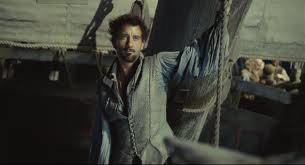

But the film certainly isn't a complete right-off.  Cate Blanchett is still fabulous, even when the script pushes her into hysterics.  Admittedly I really dug the scene where the Spanish ambassador threatens her with "There is a wind coming, Madame, that will sweep away your pride" and Elizabeth fires back:

"I, too, can command the wind, sir! I have a hurricane in me that will strip Spain bare when you dare to try me!" 

In fact, all the performances are great.  Geoffrey Rush has a sickly, crocodilian quality throughout the film that makes him compulsively watchable.  Clive Owen is so charmingly roguish and swashbuckle-y that even I'd be tempted to sleep with him.  Speaking of sleeping with someone, it's not hard to see why Raleigh found the charms of Abbie Cornish as Elizabeth Throckmorton to be completely irresistible.


And it's not just the actors who look pretty.  Like every other Shekhar Kapur project, the film looks rich and opulent in a manner befitting a Queen's real environs.  The costumes are both elaborate and authentic.  Elizabeth's war room, her main audience chamber and Old St. Paul's cathedral all look stunning.  And although it's historically shaky, the use of Eilean Donan Castle in Scotland was a welcome nod to Mary's place of exile.    

Kapur and his highly adept Cinematographer Remi Adefarasin (who also shot Elizabeth) have delivered a film rife with color and moody lighting.  They also succeed in injecting a tremendous amount of verve into the film with a series of fascinating POV shots.  By employing an ominous low angle or humbling bird's eye view, each individual scene takes on a unique tonal ambiance.   

Honestly, Elizabeth: The Golden Years isn't a rotten film, it just suffers terribly when compared to the clarion voice and narrative thrust of its predecessor.  I really wish this cast and crew had reunited to do a simpler story, perhaps taking Elizabeth up to the cusp of Spanish invasion.  This could have allowed the screenwriters to deal more effectively with the Raleigh/Bess love triangle and the assassination subplot while retaining the perfect subject matter for a rousing finale. 


Instead what we get here is the costume drama equivalent of Spider-Man 3.    


Tilt: down.

Saturday, June 23, 2012

Movie Review: "The Countess" by David Pretty


"History is a tale told by the victors,"
                                                               - Daniel Bruhl as Istvan Thurzo.

As a fan of horror, I read many a book about the genre as a teenager and I distinctly remember the following passage in The Encyclopedia of Horror:

"Countess Elizabeth Bathory (was) a Hungarian noblewoman who became a sort of vampire queen.  She was alleged to have murdered and drunk the blood of several hundred young girls, her activities having inevitable lesbian undertones."

At the risk of spoiling the film's entire plot, I won't quote anything else, but I will say that the passage that follows is even more salacious.  Sadly, I also recall believing every word of this because, hey, it's in a book!  That means it gotta be true!  Right?

A part of me wonders if writer/director/actor Julie Delpy read something similar at a young woman, but had a hard time accepting such an acutely monstrous characterization.  Perhaps she considered the possibility that this woman's mental illness was demonized and exploited by the patriarchal powers of the day for political reasons.  And that's precisely what her film, The Countess, is all about.

Before we go any further, feel free to pass judgement on the film's sumptuous-looking trailer:


Growing up as a Hungarian noblewoman, Erzsébet Báthory (Delpy) was raised in a stern, unforgiving and sometimes cruel environment.  As a teenager she wed Baron Franz Nádasdy but was widowed at age thirty-eight when her husband fell ill after an extended military campaign.  Not long after, Count György Thurzó (John Hurt) becomes enamored with her but his clumsy advances are rebuked.  Instead, Erzsébet begins a torrid love affair with György's twenty one year old son Istvan (Daniel Bruhl).

In a blatant act of revenge, György forces his son to wed the daughter of a Danish merchant.  He even goes to so far as to forcibly detain Istvan, preventing him from keeping an appointed date with his beloved.  As a result, Erzsébet assumes that she's been stood up and begins to fall into a terrible depression.

Her melancholia deepens in the toxic company of Dominic Vizakna (Sebastian Blomberg), another nobleman who also lusts over Erzsébet but only receives her contempt in return.  Vizakna manages to convince her that the affections of young people like Istvan are fleeting, superficial and only snared by youthful beauty.  This seems to complete her slide into self-loathing and psychosis.


Things come to a head after Erzsébet lashes out at one of her servant girls with a sharp brush, drawing blood and splashing some onto her own face.  While wiping away the evidence of her rage, she somehow becomes convinced that the blood of young virgins will restore a youthful cast to her skin and reverse the aging process.

Despite the councils of her devoted servant and occasional lover Anna (Anamaria Marinca), Erzsébet begins to slide deeper and deeper into madness.  Her incessant need for blood soon begins to cast long shadows over her estate.  When Vizakna, King Matthias and the elder Thurzó begin to hear about a rash of local disappearances, they begin to plot on how best to spin Erzsébet's insanity to their own political advantage.

First off, let me say that Julie Delpy is an amazing triple threat here.  She wrote the screenplay, directed the film and also brings the Countess to life with an austere yet nuanced performance.  It truly is to her credit that such a flawed and repellent character can still retain a modicum of sympathy.  Despite knowing how the story turns out, I was still silently begging for her to accept Anna's help and to somehow make her way out of the darkness.


As good as her performance is, it's her accomplished skills as a director that truly manages to impress.  Indeed, she exhibits a veteran's eye for shot composition, camera movement and lighting in particular.  She's presided over the creations of some truly incredible costumes and sets.  She's also acutely aware of how important it is to shoot in real, evocative locations.  From lush green fields to formal dance halls, from the exterior walls of Castle Čachtice to the dark dungeons underneath the imposing keep, the film feels incredibly genuine and proudly displays every dime of its $8 million dollar budget.

Only with the screenplay does Delpy stumble somewhat.  The narrative bookends performed by Daniel Bruhl alternate between utilitarian or literal.  It either doles out the details of Erzsébet's early life like a "Things-To-Do" list or bashes away at the film's theme like a scripted game of "Whack-A-Mole".  A more deft approach certainly would have been harder to pull off, but it also would have made the story a lot more deeper and rewarding.  In criticizing the narration, I certainly don't want to disparage Daniel Bruhl's performance, since he's truly one of the highlights of the film.

Having said that, a lot of the dialogue comes across as oblique and painfully workmanlike.  Between the clunky lines and his shaky accent, William Hurt as György Thurzó really seems to be off of his A-game here.  Looking like the love child of Eli Roth, Glen Danzig and Kevin Nealon, Sebastian Blomberg as Dominic Vizakna is alternately distracted and distracting.  He also seems to be struggling with the "Snidely Whiplash" dialogue and often comes off as comically nefarious.  In stark contrast, Anamaria Marinca seems completely at home here.


Taken as the sum of its uneven parts, The Countess is still a respectable little film.  It certainly made me think about Erzsébet Báthory in a new light and consider the nature of recorded history.  The strident case made by the script may very well be biased but its delivered with such aplomb that it changed my preconceived notions about the subject matter.  Which means that the film succeeded in delivering something at least moderately worthwhile.

           
    Tilt: up. 


Thursday, June 14, 2012

"Prometheus" Movie Review by David Pretty


I officially gave up on the Alien franchise when screenwriters David Giler, Walter Hill
and Larry Ferguson decided to kill off Newt and Hicks in Alien 3.  I couldn't believe that they were so quick to piss on the triumphant legacy of Aliens just to set up a tired rehash of the first film.  At that moment, I concluded that the franchise had gone out of bounds and I just didn't care anymore.


So, you can imagine my joy when original Alien director Ridley Scott returned to the franchise with a prequel that would, hopefully, put things back on the rails and return a modicum of dignity to the concept.

Did he succeed?  Well, yes and no.  Prometheus is, at face value, a beautiful mess.

Before I get into as many details as a reasonably non-spoilerish review will allow, here's the film's mind-blowingly awesome trailer:


In the year 2089 archaeologists Charlie Holloway ( Logan Marshall-Green) and Elizabeth Shaw (Noomi Rapace) discover a similar series of pictograms which have independently appeared amongst several unconnected human civilizations.  These images depict a group of humans looking in awe at a larger figure which, in turn, is pointing towards a distant cluster of stars.  The scientists posit that human life was sparked by these titanic beings (whom they dub "The Engineers") and assume that the star-map is an invitation to meet our makers.

Rich, one-foot-in-the-grave industrialist Peter Weyland (Guy Pierce) sponsors an expedition to this star system aboard the unfortunately-named scientific vessel Prometheus.  During the two year long voyage, the crew is kept in stasis pods and monitored by the fastidious, Peter O'Toole-obsessed android David (Michael Fassbender).


Upon arrival on the harsh planet of LV-223, Charlie spies an intriguing roadway ("Right there!  God doesn't build in straight lines.") which leads them to a massive earthen ziggurat.  A survey team ventures inside the mysterious catacombs and begin to unearth clues using a combination of remote probes and good old-fashioned nosiness.

David, in particular, seems to posses an odd affinity for the place.  He secret triggers a posthumous holographic log which documents the panicked flight of the original inhabitants.  For continuity junkies, these beings just so happen to resemble the ill-fated "Space Jockey" from the original Alien film.      


Eventually our intrepid explorers reach the core of the complex which is dominated by a huge sculpture of a human-like head.  As they enter the chamber, the murals on the ceiling above become mutable.  Black goo begins oozing out of a slew of canisters arrayed around the room.  The team wisely decides to skedaddle, arriving back at the ship just prior to a vicious silicon storm.

Needless to say, things begin to fall apart.  We soon learn that David has secretly smuggled one of the mysterious containers back onboard the ship and there's something alive in it.  Two of the team members who get lost in the maze experience a horrifying close encounter.  Elizabeth becomes the unwitting pawn in a gruesome experiment.  


To reveal anymore of the plot would be criminally negligent.  Just suffice to say that you'll probably need a scorecard to keep track of all the different xenomorphs and unanswered questions that the Prometheus screenplay seems to spawn.

First off, the film looks absolutely amazing.  Except for the odd murky misstep (Gladiator, I'm looking in your direction), Ridley Scott is truly adept at creating spectacular and completely convincing fictional environments.  Every costume, prop and set seems to have some organic purpose, some dedicated function.  From the deck of the Prometheus to the innards of the Engineer's lair, the art direction and production design alone make the movie worth a watch.


Scott also comes through with some incredibly frantic action sequences.  Witness Elizabeth's flight to self-surgery, the assault on Millburn and Fiefield and the chaotic, large-scale interdiction that occurs at the finale.  During it all, cinematographer Dariusz Wolski captures the cold austerity of the Prometheus sets and the epic final action beats with equal dexterity.

The performances range from good to Oscar-worthy.  Noomi Rapace is fantastic as Elizabeth.  Even when she's single-handedly giving added significance to the film's title, we still empathize with her.  I also suspect that Ridley Scott must have detected a Sigourney Weaver quality about her since many of her latter scenes are evocative of Ripley.


Of course, the other flagship performance here is Michael Fassbender as David.  Since we already know that David is an android from the very start, Fassbender plays the role to the hilt.  He's like a combination of Don Draper from Mad Men, Sheldon from The Big Bang Theory and Data from Star Trek: The Next Generation.  Although the script fails to give him a clarion sense of motivation (or we're left to assume that his erratic behavior can be excused away with "programming"), Fassbender's inherent charisma ensures that we don't write the character off at completely oblique.

Conversely, I have no idea why Guy Pearce was cast as crusty ol' Peter Weyland.  Not to disparage Pearce or his performance, but I have no idea why a director would opt for a barely-convincing makeup job when they can hire an accomplished older actor.  C'mon, somebody get Martin Landau or Sean Connery on the horn!

British actor Idris Elba (who was fantastic as Stringer Bell in The Wire) is perfectly cast as Janek, the skipper of the Prometheus.  He manages to strike the perfect balance between world-weary resignation,  wry humor, human empathy, gutsy fatalism and a fierce protective streak towards his ship.  As such, the script really didn't sell me on Janek's final solution to the alien threat.  Sorry, but the average shmoe would humor a million alternatives before choosing what Janek and his bridge crew decide on.


Logan Marshall-Green does a convincing job taking Charlie through several states of physical and mental stress.  As the true nature of the Engineers is revealed, his giddy initial thrill of discovery is convincingly deflated.  And while I can certainly understand his despondence, the script really doesn't give him a reason to act like a jackass to David.  In fact, their scene together seems to exist only to excuse David's next course of action.

Charlize Theron is appropriately stone-cold and acerbic as Meredith Vickers.  Due to her angelic good looks, she's almost miscast here, but she still manages to acquit herself quite nicely.  Her scenes with Fassbender and Pearce are particularly good, mainly because her motivations slowly come into focus.  The scene where she confronts David over his secret commiserations with Weyland is particularly tense.


As you've likely already gathered, the main problem with the film is its nebulous and overly-flakey script.  I really don't mind when movies lord a few secrets over us after the credits roll, but Prometheus is rife with maddening plot holes.  Although I can't table them without venturing into the realm of spoilers, just suffice to say that the convoluted alien entomology presented in Prometheus makes The X-Files look like E.T.        

At first, I thought that the failings were more mine then the film's.  After all, one of my initial "A-ha, gotcha!" moments was quickly debunked.  I honestly didn't notice that the planet Prometheus travels to (LV-223) is different from the planet featured in the first two films (LV-426).  Needless to say, I'm glad that I did a bit of research before writing this review.


Having said that, I still can't shake my suspicions that screenwriter Damon Lindelof painted himself into a corner just like he did on Lost.  My lingering impression of Prometheus is that either large chunks of the film were edited out or Scott, Lindelof and co-writer Jon Spaihts were trying to pass off their half-baked ideas for brilliance.  In the end, I'm left longing for Dan O'Bannon's original Alien script, which teased us with a sense of mystery while remaining altogether lucid.     

As a moviegoer who's routinely expected to ingest such mindless swill as Couple's Retreat and Ballistic: Ecks vs. Sever, I think it's a tad churlish to criticize a film that doesn't connect all of the dots and actually inspires a healthy modicum of debate.  In the same breath, I just wish that Scott and company had provided more concrete evidence to support their assumption of ingenuity.


    Tilt: up.


Monday, June 4, 2012

Movie Review: "Braveheart" by David Pretty


There've been some pretty questionable Oscar winners in the past.  Titanic beat out L.A. Confidential.  Forest Gump edged out Shawshank Redemption.  Gladiator trumped Crouching Tiger, Hidden Dragon.  Braveheart won over The Usual Suspects.

Before I go any further I just wanna let that sink in for a little bit.


After watching a slew of Mel Gibson flicks recently I've noticed some common threads.  As I mentioned in my Mad Max review, Gibson rarely seems to deviate from playing the same character over and over again.  Indeed William Wallace is pretty much in-step with Max Rockatansky and Martin Riggs: essentially he's a peaceful dude who's been pushed to the brink by EVIL MEN.

That's all fine and good in a work of fiction but is it really fair to pastiche a real-life historical figure with the exact same personality?  Well, in the case of Braveheart you can apparently jettison most of the facts and still come out an Oscar richer.  Now, don't get me wrong, this isn't a terrible film.  It's well directed, has tons of lush cinematography, boasts a solid cast and encapsulates the gist of the story quite nicely.  But in many ways it's extremely wrong-headed.

I know that Mel was forced star in the film in order to get it financed, but Braveheart really would have been better served if an unknown Scottish actor had been cast in the lead.  Although Gibson can sleepwalk his way through a role like this, he was a bit long in the tooth at the time.  By all accounts, Wallace was in his late twenties at the start of the rebellion and Mel was around forty at the time.  Often he looks less like a Scottish Highlander and more like a roadie for Anvil.

"Sorry, mate, I don't work with pyro..."

Although the English certainly weren't saints, Gibson does what he can to make them as one-dimensionally villainous as possible.  For example, there's no evidence to support that Edward enacted the despicable practice of primae noctis which supposedly gave feudal lords the right to claim the virginity of the estate's women.  In fact, a claim can be made that this edict didn't even exist.

Regardless, Gibson and his screenwriters show Edward Longshanks gleefully enacting such barbarism.  Why does he despise the Scots so much anyway?  I'm willing to bet that the real reason was a lot more compelling than the script's assertion that cruelty and subjugation just so happened to be Edward's hobbies.  Honestly, when antagonists act evil just for the sake of the script, we might as well be watching a Rocky & Bullwinkle cartoon.

Edward paws over his daughter-in-law, hucks his son's gay lover out the window, slaughters the Scottish chieftains after he invites them to parley and casually issues orders to kill his own infantry.  I know Edward had his issues, but I don't see a huge difference between this and the sort of manipulation employed by made-for-TV-disease-of-the-week flicks.  It hate it when audiences mistake this sort of laziness as historical accuracy.  

"I'm evil and I know it."

Where is Andrew de Moray during all of this?  Where's the actual bridge in the Battle of Sterling Bridge?  Are we really supposed to believe that Wallace met and then knocked up the Queen of England?  And that he successfully sacked the city of York?  As these inconsistencies pile up, my opinion of the film starts going from "jewel" to "junk".

And it gets worse.  The film's highly-vaunted battle scenes are also starting to look a bit threadbare to me.  High-def, wide-screen home viewings now reveal inaccurate costumes, equipment and background extras flailing pitifully at each other with fake swords, obviously waiting for someone to yell "CUT!"

Setting these criticisms aside, Braveheart certainly does a lot of visceral things right and it's easy to get swept up in this classic "underdog" story.  The film also does a great job depicting the fractured nature of Scottish resistance and how difficult it was to mount a united front against the English.  The melee scenes also depict the true brutality of medieval combat better than anything that came before it.

"What?  It wasnae me!"

The cast is generally quite good, particularly Brendan Gleeson as Hamish and David O'Hara as Stephen (who either has a direct line to God or is nuttier then a Pal-O- Mine bar).  James Horner's soundtrack is grand, emotional and evocative of the setting.  Indeed, the crowning jewel of the film is the countryside itself and the sweeping shots of the Scottish Highlands are truly breathtaking.

Honestly, I really don't expect an historical drama to be 100% accurate.  I know things need to be fudged for dramatic effect, but I certainly expect the film-makers to get more right than wrong.  Braveheart veers dangerously close to crossing over that line.

It certainly doesn't bode well that my opinion of the film continues to drop every time I watch it.


Tilt: down.

Monday, May 28, 2012

Movie Review: "Lethal Weapon 2" by David Pretty


What do you do when all the best cinema villains have already been beaten into submission?  With action films already a-swarm with Commies and Nazis, the scribes of Lethal Weapon 2 decided to solve this conundrum by ripping a page out of the headlines.

Unfortunately, that was over twenty years ago.


In the mid-Eighties South Africa was still employing its ass-backward program of apartheid which attempted to legitimize racial segregation and curtail the rights of the black population under white minority rule.  Needless to say, this policy was pretty unpopular just about everywhere.  "Conscience rockers" like Little Steven, U2 and Peter Gabriel seized on the hot button issue and used the medium of music to cast a glaring spotlight on this blatantly antiquated doctrine.

By 1989 Lethal Weapon 2 could have received a flag for "piling on" but the results were refreshingly original and fundamentally distasteful.  It was so high-profile, in fact, that F. W. de Klerk started the process of ending apartheid only a year after the picture was released.  Indeed, there's precious little here that South Africa would ever want to include in a tourism brochure.


Although the villainy level has clearly been jacked up for dramatic effect, Joss Ackland as Arjen Rudd still makes for a cold-fish / ripe bastard of the first order.  He's also one of the first action movie creeps to hide behind the pansy-assed "You can't hurt me! I have DIPLOMATIC IMMUNITY!" defense.

I'm sorry, but the first time this douchebag drops that particular bon mot, you'll want to leap through the screen and push your thumbs into his orbital sockets.  He's also surrounded by a veritable Rouge's Gallery of scum-baggery, notably Derrick O'Connor's as the uber-slimy Pieter Vorstedt, who's very presence will have you counting the seconds until he's exterminated.

Our two heroes Riggs and Murtaugh are more than up for the challenge.  The two have settled into a pitch-perfect alliance and their blossoming man-love is downright palpable.  Riggs isn't quite as proactively suicidal here but he's no less reckless.  He gets a few choice scenes with Roger's wife Trish (Darlene Love) which delves into his back story and adds to the character's appeal.


Danny Glover also gets more opportunities to shine, serving up one-liners like "Nailed 'em both!" with tongue firmly planted in cheek.  He manages to deliver most of his dialogue with improvisation ease and his banter with Gibson is as natural as a squabbling married couple.

There are some genuine moments of humor here as well, such as the immortal "death by toilet" sequence.  When Murtaugh, sans pants, finds himself astride Riggs in a bathtub while an airborne commode drives a stake through the heart of a certain beleaguered station wagon, any viewer not made of stone will find themselves giggling uncontrollably.


And who can forget Joe Pesci's star-making turn as "Whatever You Want" Leo Getz?  When it came to this amusing (but ultimately annoying) little fuck, less was more, which is something future entries in the series regrettably ignored.  Also of note is British actress Patsy Kensit, who makes for a distracting bit of crumpet until she's turned into the screenplay's pariah.  Finally, hardcore film buffs will have fun spotting former Colonial Marines Jenette Goldstein and Mark Rolston as both cop and robber respectively.

The action really gets dialed up to "11" here.  There are more car chases and guns-a-blazin' fireworks in the first eight minutes than there was in the entire run time of its predecessor.  Again, contemporary audiences might consider the villain's origins obscure, the tropes a bit derivative and the action sequences relatively mundane but, honestly, this is one of the first buddy cop flicks where our heroes take off the badges because "NOW IT'S PERSONAL".


Granted, this is also one of the first action films to start straining credibility.  Conveniently tying Vorsted into Martin's past is pretty far-fetched and our two protagonists certainly would have been locked indefinitely after the insane orgy of mayhem they unleash at the film's climax.

Regardless, Lethal Weapon 2 is a fun thrill ride that, in some ways, is even more satisfying than its predecessor.  Check your brain at the door, grab some beer and pretzels and get ready for another helping of "Action Movie Chicken Soup for the Soul".


   Tilt: up.

Thursday, May 24, 2012

Movie Review: "Lethal Weapon" by David Pretty


There an old joke about a pair of seniors who go to see Hamlet.  As the pair are walking out of the theatre the woman turns to her husband and asks: "So, what did you think of it?" and the old man replies: "Meh.  I've heard it all before!"

Lethal Weapon is the Hamlet of buddy cop movies.  It's been ripped off by so many lesser films that watching the original is akin to playing "spot the cliché" for a hundred and ten minutes.

If you have a pen and paper handy, kids, you can play along at home.  See how many you can jot down while watching the film's trailer...


Here are just a few of the hoary old tropes to be found in Lethal Weapon...
  • We've got a by-the-book veteran cop / family man who's just days from retirement.  
  • Suddenly he's partnered up with a young, reckless, borderline-suicidal rogue.  
  • The veteran cop says "I'm too old for this shit" not once, not twice, but thrice!  
  • The bad guy is inexplicably albino.  
  • There's equal parts homophobia and homo-eroticism.  
  • Al Leong makes an obligatory appearance as a goon. 
  • The bad guys target the good cop's family.  
  • Bad puns abound ("What did one shepherd say to the other shepherd? Let's get the flock out of here!").  
  • Our heroes are summarily tortured and/or worked over by the aforementioned Monsieur Leong.  
  • The main villain manages an eleventh hour, "Hail Mary" last gasp attack and is collectively shot down by our protagonists.  
It may sound as if I'm giving the film a blast of shit, but I'm not.  After all, these guys did it first, they did it well and they didn't completely throw out physics and the laws of reality.  Given that people have the attention span of a squirrel nowadays, Lethal Weapon must seem almost quaint and borderline pedestrian to them.  But, by God, it's got charm and watching it again after so many years is like putting on an old pair of action movie slippers.

The gloriously be-mulleted Mel Gibson (who's seems loopier than average in this one) actually has a few scenes of genuine emotional heft.  We're in the guy's corner within the first half-hour or so because his BELOVED WIFE died in a CAR CRASH and he CAN'T GO ON LIVING WITHOUT HER.  Only THE JOB gives him the will to carry on.  Richard Donner might be going for the garbage goal on this one, but it really generates a lot of sympathy for Riggs.


And what the fudge (to borrow a cue from bad prime-time dubbing) happened to Danny Glover anyway?  The dude just oozes charisma here and he's a joy to watch.  Together the two make for one of the best "odd couple" cop pairings in cinema history.


Also check out the big acting chops on Gary Busey before he went all nuts in real life (Hmmm, maybe there's some sort of Poltergeist-like curse at work here).  As the pigment-and-conscience-deficient merc Joshua he's ruthless and easily hate-able but not in a lame, melodramatic "Snidely Whiplash" kinda way.


Once knocked for being "unrealistic" and "wild", the action beats in Lethal Weapon look like The Wire when comparison to video game flotsam like Crank: High Voltage.  I know the film is somewhat dated and downright low-gear when compared to the current generation of action films, but bless its modest little heart.  It's still a lot of fun to see the cast preserved here in all of their late-Eighties glory.

When you watch it next time, just put the checklist away and indulge in the equivalent of some action movie comfort food.


     Tilt: up.

Wednesday, May 16, 2012

Movie Review "The Road Warrior" by David Pretty

 
Felicitations, Road-Ragers! 

The whole Mad Max concept came to a head with its 1981 sequel The Road Warrior.  The Miller/Kennedy team returned with a bigger budget this time, delivering a follow up which honored its roots but could also stand alone as a separate film.  Although Mad Max was a smash in Australia, it didn't export very well, even after the producers were forced to dub the cast with ludicrously overwrought American accents.  Even American-born (and soon-to-be-ridiculously-famous) Mel Gibson came off sounding like a used car salesman!

Before we strap ourselves into our Interceptor and go off in search of the precious juice, here's the film's nitrous-fueled trailer:


The apocalyptic future presaged by the first film has come to pass and there's a genuine feeling of de-evolution in The Road Warrior.  To help establish the second film as an original entry, we get a short narrative prologue informing us that global order has collapsed in the face of a chronic fuel shortage.  To make matters worse "two mighty warrior tribes" have gone to war and life has now become a "whirlwind of looting and a firestorm of fear, in which men began to feed on men."  The incredible thing is, the more you research the concept of peak oil, the more eerily prescient this all seems to be.

During this set up we see clips of an impossibly youthful-looking Gibson frolicking with his fictional wife Joanne Samuel, which probably had audiences in the Eighties scratching their heads since most people had no idea that The Road Warrior was a sequel.  After killing the Toecutter's gang, Max wanders out into the wasteland and learns to live off the corpse of the old world.  His only resources are his trusted Blue Heeler appropriately named "Dog", a barely-functional sawed-off shotgun and what remains of his precious V-8 Interceptor.

  
His unearthly skills behind the wheel serve him well as he confronts a gang of road scum over a crashed gas tanker.  Victorious, he makes off with the precious cargo inside and soon encounters a similarly-abandoned gyro copter.  Initially snared in a trap, Max craftily outwits the Gyro Captain (Bruce Spence) and prepares to do him in.  The pilot barters successfully for his life when he tells Max that there's a facility nearby that's producing a limitless supply of petrol.

Intrigued, Max discovers a working oil refinery besieged by an army of marauding scumbags armed with weapons and deadly vehicles.  This human detritus is led by the pistol-toting, goalie-masked, impossibly-ripped Lord Humongous, who's been trying in vain to get the settlers to surrender using a combination of threats, violence and sweet talking.

 
After retrieving one of the settlers mortally wounded by the gang, Max manages to weasel his way into the good graces of the refinery's leader Papagallo (Michael Preston).  He strikes a deal to retrieve a rig which the settlers plan to use as bait while the civilians make a break for it.  As the film continues to unspool we're treated to some increasingly spectacular automotive duels and watch as Max struggles to rise above the savagery of the world around him.

The Road Warrior does what all good sequels should do: it expands on the vision of the original.  The story is considerably more focused, like a sci-fi twist on the "Man With No Name" westerns.  The costumes are spectacular, launching a slew of copycat films and influencing about a million heavy metal videos.  The vehicles are also appropriately bizarre and you really get the sense that these things have been cobbled together from a million different sources.

 
The breakneck action on display here is probably why I have such contempt for Michael Bay's films.  There's not one frame of CGI here folks, just a shit-load of ballsy stunt work and motorized mangling is unrivaled.  The final assault on the tanker is shot with a series of wide angles so it's easy to see that there were no cheats.  Every kill, collision and desperate skirmish is planned out with vicious precision.

There's also a helluva lot more going on here besides vehicular anarchy.  Whereas the first film is a straight-up revenge fantasy, The Road Warrior is a story of redemption.  This is never more apparent then when Max encounters the animal-skin clad, metal boomerang-wielding Feral Kid (Emil Minty).

 
While thinking about his own lost son, Max gives the child a mangled music box.  Not long after, Max  catches the outback urchin literally following in his own footsteps.  Disturbed by the prospects of getting emotionally attached to something else that might be taken away from him, Max throws the young stowaway's gear out of his car.  Needless to say, the effect is pretty heart-wrenching, even for what's supposed to be a hard-boiled sci-fi flick.

The performances are all top-notch.  Intense, evasive and self-assured, Gibson handily makes Max one of cinema's greatest anti-heroes.  Bruce Spence's unique appearance and oddball mannerisms make his Gyro Captain a ridiculously memorable character.  The villains in this one also make the "Toecutter" from the first film look like a member of One Direction.


Max's story did continue in Beyond Thunderdome but that film was marred somewhat by real tragedy when producer Byron Kennedy was killed while scouting for locations.  Rumor has it that director George Miller lost his passion for the project and the final film seems to echo this somewhat.

Nevertheless, that doesn't diminish this tremendous film, which I have to put towards the top of my list of all-time favorites.


Tilt: up.